ARTIFICIAL INTELLIGENCE FOR SUSTAINABLE EDUCATION IN INDIA: PROBLEMS AND PROSPECTS
DOI:
https://doi.org/10.25215/1105570053.16Abstract
The present study seeks to examine the challenges and the role of artificial intelligence for sustainable education in India: problems and prospects. Artificial Intelligence in educational frameworks enables addressing obstacles and improving the education sector in India. This study tries to understand the critical role of Artificial Intelligence in education, determine strategies and policy suggestions that can help India's educational structures controlled by AI, improve administrative procedures, and personalise learning. There are significant obstacles to the practical use of AI, including issues like a lack of digital infrastructure, concerns about data privacy, and the requirement for qualified teachers. Many rural and underprivileged communities lack dependable internet access, gadgets, and digital literacy, causing further establishment of educational inequalities. AI-based solutions are not widely adopted in schools and colleges due to a lack of suitable technical infrastructure. In order to promote educational equity, AI platforms offer scalable options for delivering high-quality educational information, especially in rural and underserved communities. This study aims to contribute to a roadmap for how AI in education will develop in the future and how India can respond to a global trend to meet specific educational demands and limitations. India’s educational system could be revolutionised by AI-enabled governance, which uses data-driven policies to enhance resource allocation, inclusion, and decision-making. This strategy promotes Viksit Bharat @2047 by combining ethical AI, human-machine collaboration, and digital ecosystems, guaranteeing that everyone receives an education that is fair, excellent, and prepared for the future.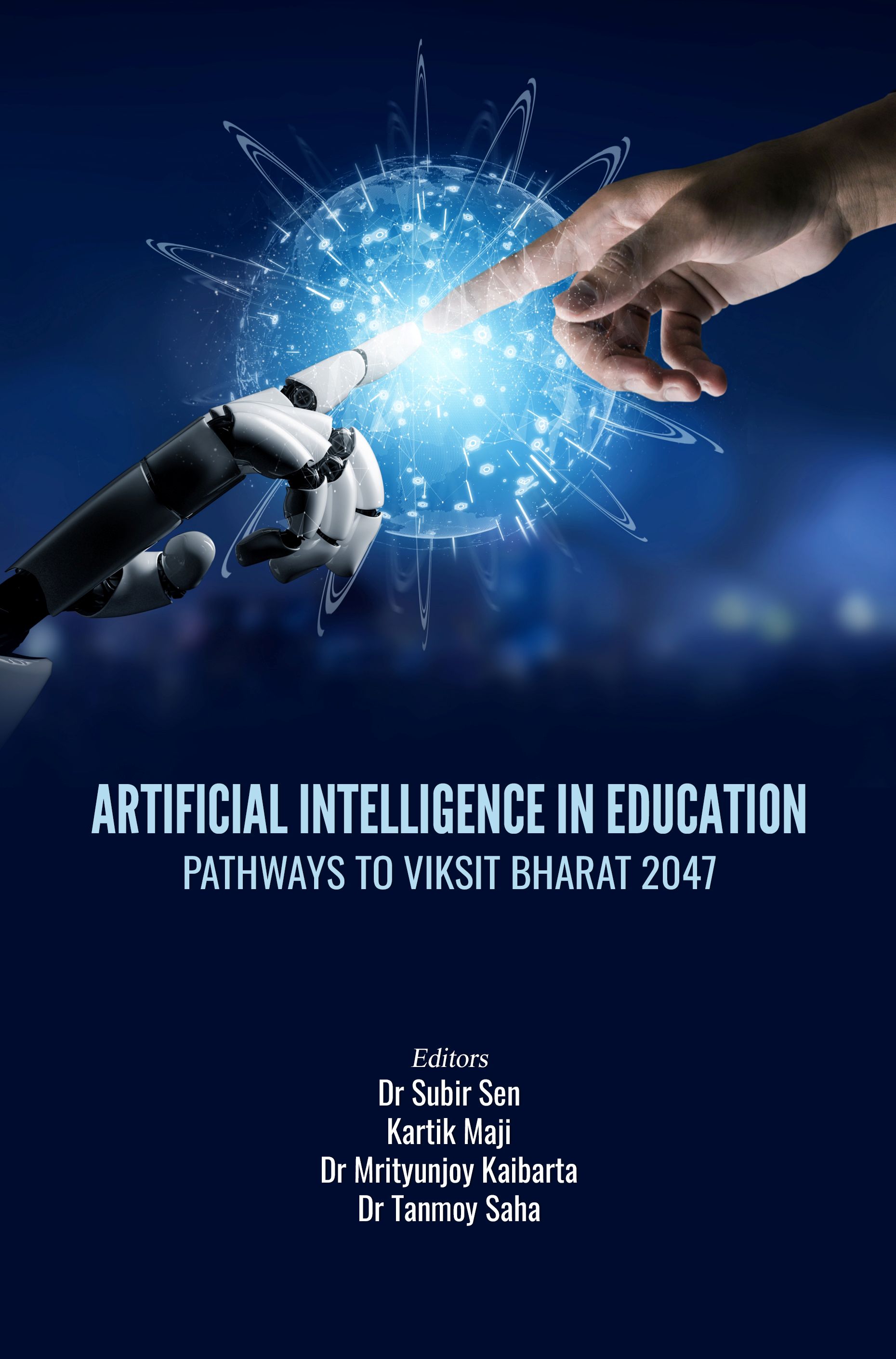
Published
2026-02-17
Issue
Section
Articles

