INTEGRATING PSYCHOLOGICAL SCIENCE, NEUROSCIENCE, EDUCATION, AND SOCIETY: EMERGING INTERDISCIPLINARY PARADIGMS
DOI:
https://doi.org/10.25215/1105459691.22Abstract
Psychological science has increasingly evolved into a multidisciplinary field that connects neuroscience, education, and broader societal structures. Contemporary research demonstrates that cognition, emotion, and behaviour arise from dynamic interactions among biological systems, learning environments, and socio‑cultural contexts. Advances in neuroscience have enhanced understanding of neural mechanisms underlying memory, learning, emotional regulation, and mental health. At the same time, educational research has contributed evidence‑based approaches that improve teaching strategies, assessment practices, and student wellbeing. Interdisciplinary integration has also become crucial in addressing societal challenges such as mental health concerns, inequality in education, and the need for inclusive learning environments. Emerging paradigms such as neuroeducation, social neuroscience, and data‑driven research methodologies are reshaping how human behaviour is studied and applied in real‑world contexts. This chapter explores the convergence of psychology, neuroscience, education, and society, emphasizing how interdisciplinary approaches enhance the understanding of human behaviour and inform effective interventions in education, healthcare, and public policy. It further highlights the importance of research capacity building, technological innovation, and supportive educational environments in fostering sustainable human development in an increasingly interconnected world.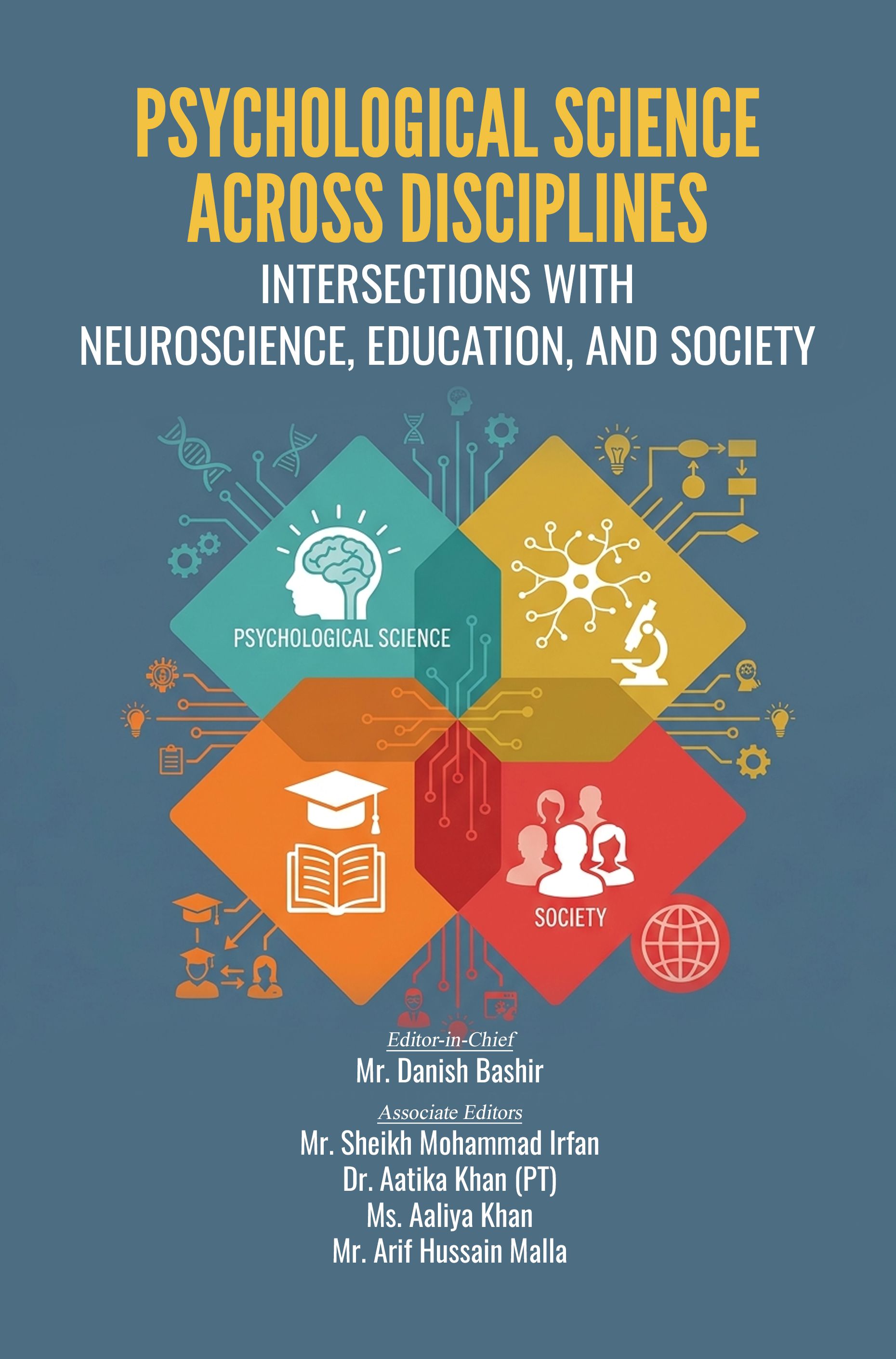
Published
2026-03-07
Issue
Section
Articles

