APPLYING IKS TO SUSTAINABLE DEVELOPMENT, MODERN TECHNOLOGY, AND EDUCATION
DOI:
https://doi.org/10.25215/1105436810.05Abstract
Indian Knowledge Systems (IKS) represent a long-standing intellectual heritage that has evolved through centuries of observation, philosophical reflection, and practical engagement with nature and society. These systems encompass a wide range of disciplines, including philosophy, mathematics, medicine, agriculture, ecology, architecture, and education. In recent years, scholars and policymakers have increasingly recognized the importance of indigenous knowledge traditions as valuable resources for addressing contemporary global challenges such as environmental degradation, unsustainable development, and ethical concerns associated with rapid technological advancement. This chapter explores the relevance and practical application of Indian Knowledge Systems in three key domains: sustainable development, modern technology, and education. Traditional ecological wisdom embedded in Indian cultural practices emphasizes the interdependence between human beings and nature and provides effective strategies for sustainable resource management. Historical achievements in areas such as mathematics, metallurgy, astronomy, and architecture illustrate the scientific sophistication of Indian knowledge traditions and their continuing relevance in technological innovation. Additionally, educational philosophies rooted in traditional systems, particularly the Gurukul model, highlight the importance of holistic learning, experiential methods, and value-based education. These principles strongly resonate with contemporary educational reforms that seek to promote creativity, critical thinking, and ethical responsibility among learners. By examining these dimensions, the chapter argues that integrating Indian Knowledge Systems with modern scientific perspectives can contribute significantly to sustainable development, responsible technological progress, and holistic educational transformation. Furthermore, the chapter emphasizes the need for systematic research, preservation, and incorporation of traditional knowledge within modern academic and policy frameworks to create a balanced and sustainable future.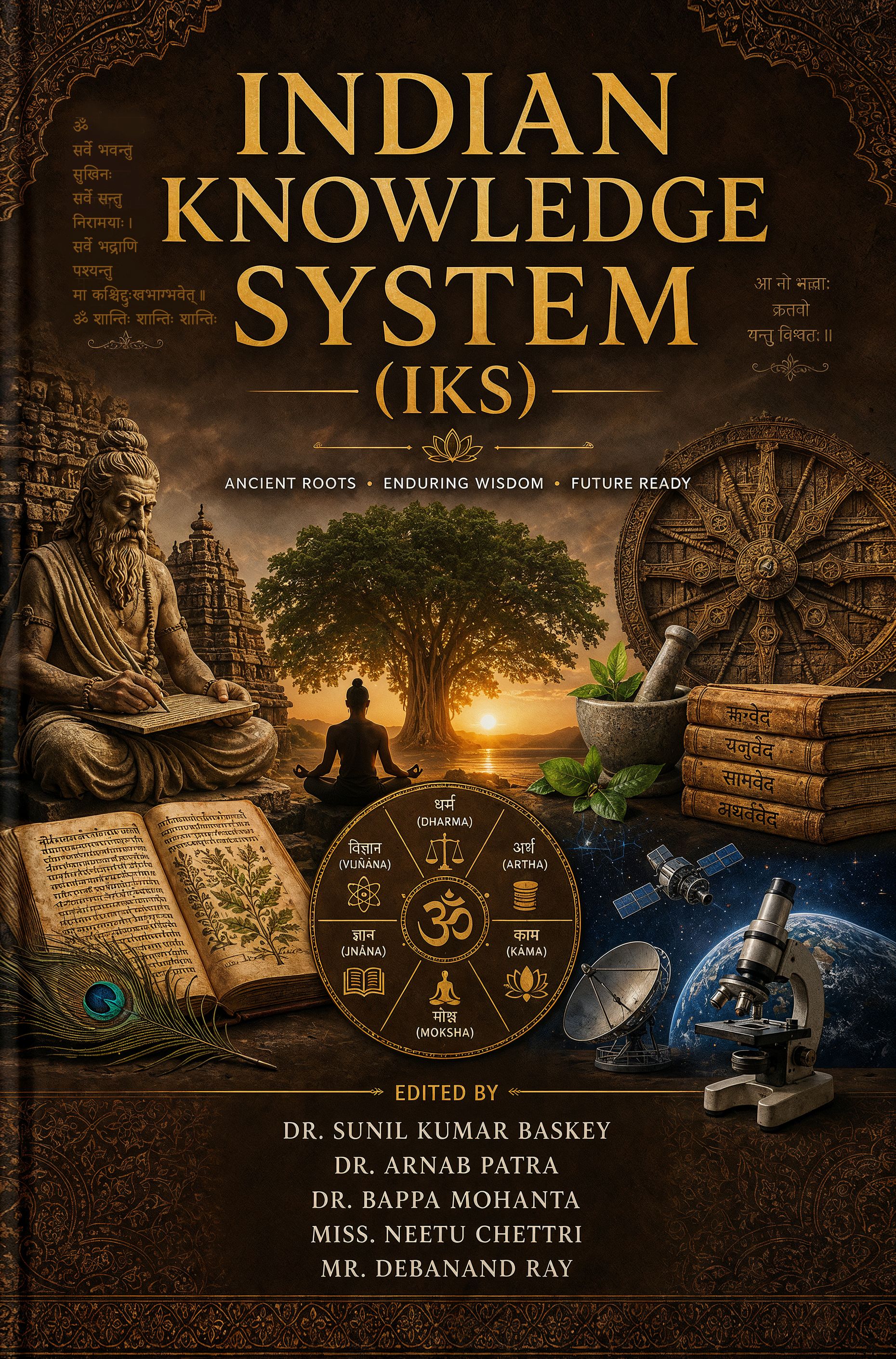
Published
2026-04-20
Issue
Section
Articles

