INFLUENCE OF SANSKRIT LITERATURE ON INDIAN KNOWLEDGE TRADITION
DOI:
https://doi.org/10.25215/1105436810.18Abstract
Sanskrit literature constitutes the foundational framework of the Indian knowledge tradition, preserving intellectual, philosophical, scientific and cultural heritage for over three millennia. Beginning with the Vedas and Upanishads, Sanskrit texts established a holistic conception of knowledge integrating metaphysics, ethics and empirical inquiry. The systematic linguistic structure formulated by Panini in the Ashtadhyayi ensured accurate transmission of knowledge across generations. Scientific disciplines such as astronomy and mathematics were advanced by Aryabhata, while medical sciences developed through the works of Charaka and Sushruta. Ethical, social and political thought were articulated in the Arthashastra by Kautilya, and cultural values were shaped through epics such as the Ramayana and Mahabharata. The Indian knowledge tradition thus evolved as an integrated system where science, philosophy, art and spirituality were interconnected rather than isolated disciplines. Sanskrit literature functioned not only as a medium of communication but as a methodological tool for inquiry, reasoning and experiential learning. Its continuing influence is visible in contemporary fields such as yoga, Ayurveda, linguistics, education and ethics, demonstrating its relevance as a living intellectual heritage rather than merely an ancient literary corpus.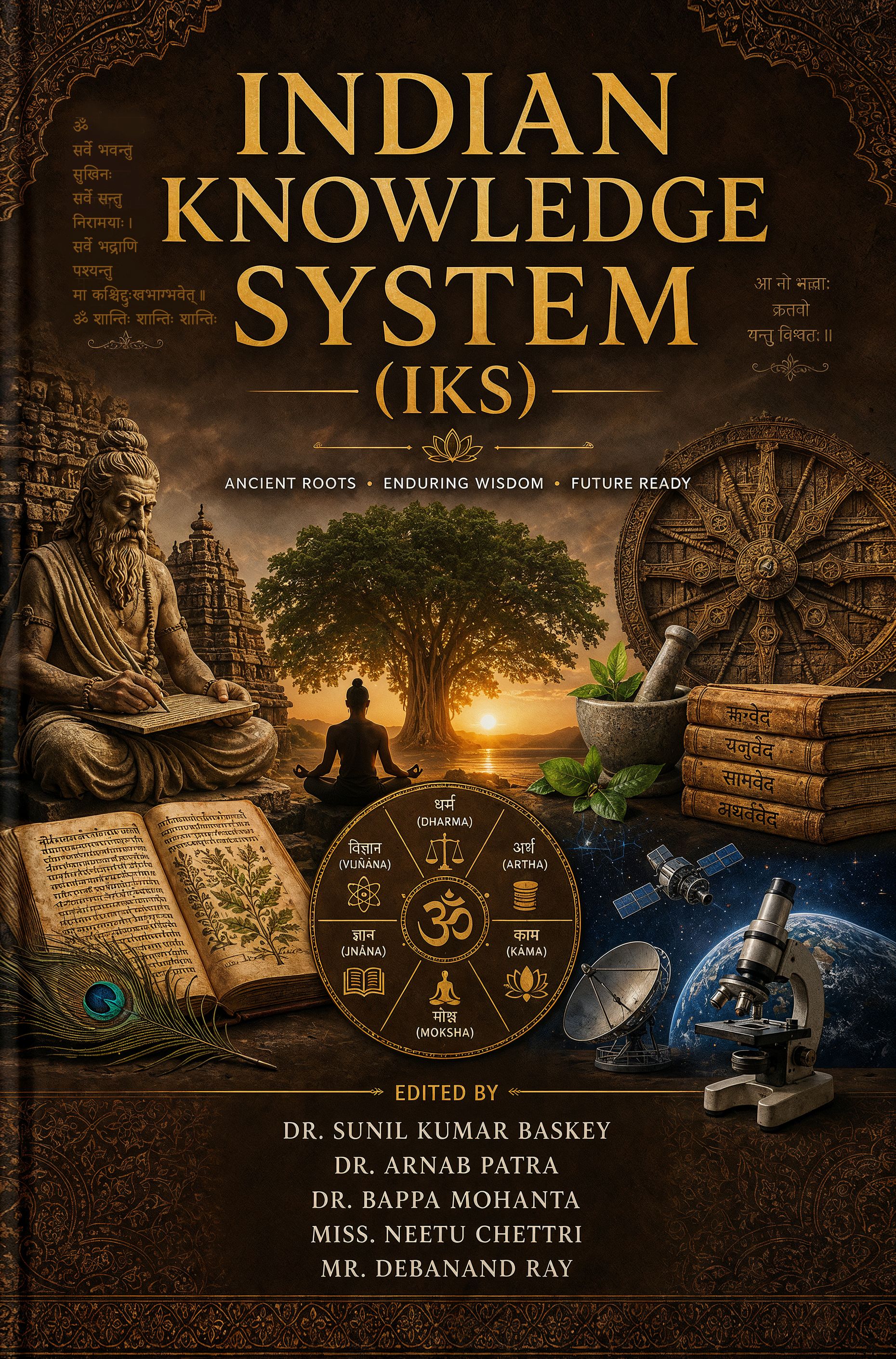
Published
2026-04-20
Issue
Section
Articles