INDIAN KNOWLEDGE SYSTEM: A FRAMEWORK FOR PROMOTING VALUE-BASED EDUCATION AND SUSTAINABILITY
DOI:
https://doi.org/10.25215/1105436810.25Abstract
The Indian Knowledge System (IKS) represents a rich and diverse intellectual tradition that has evolved over thousands of years on the Indian subcontinent. It encompasses a wide range of disciplines, including philosophy, education, science, medicine, environmental knowledge, ethics, and social organization. Rooted in holistic thinking, the Indian Knowledge System emphasizes the interconnectedness of human life, society, and nature. In recent years, there has been increasing recognition of the importance of integrating Indigenous knowledge traditions into modern education to promote value-based and sustainable learning. This chapter explores the significance of the Indian Knowledge System as a framework for developing ethical, socially responsible, and environmentally conscious education in schools. Traditional Indian educational philosophies highlight the importance of moral values, character formation, self-discipline, and experiential learning. Concepts such as harmony with nature, respect for all living beings, and responsible resource use reflect an ecological perspective that aligns with contemporary ideas of sustainable development. These principles offer meaningful guidance for addressing current global challenges, such as environmental degradation, social inequality, and ethical crises. This chapter also discusses the relevance of incorporating Indian Knowledge Systems into modern educational curricula in line with recent educational reforms. By combining traditional wisdom with modern scientific knowledge, education can become holistic, culturally rooted, and socially relevant. Furthermore, integrating value-based learning derived from Indian philosophical traditions can help nurture responsible citizens who contribute positively to society and the environment. Therefore, the Indian Knowledge System provides a meaningful foundation for rethinking education in ways that support sustainability, ethical awareness, and holistic human development.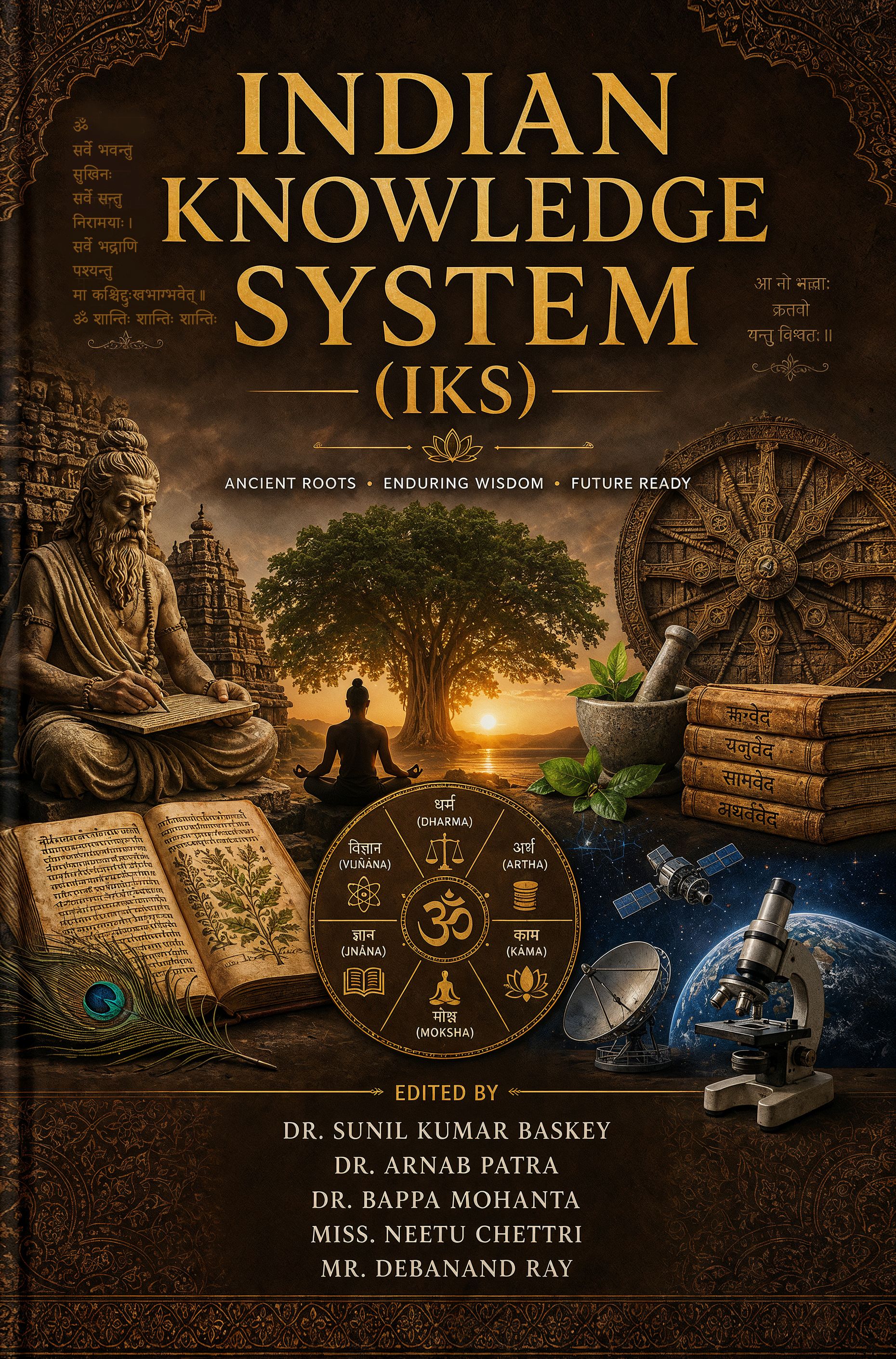
Published
2026-04-20
Issue
Section
Articles

