THE POSTHUMAN TURN IN EDUCATION: FOUNDATIONS FOR REIMAGINING LEARNING FUTURES
DOI:
https://doi.org/10.25215/9141002466.01Abstract
The rapid advancement of artificial intelligence (AI), digital technologies, ecological crises, and global interconnectedness has fundamentally reshaped educational discourse, prompting scholars to question the adequacy of traditional humanist assumptions that have historically underpinned teaching and learning. The posthuman turn represents a significant philosophical shift that challenges anthropocentric views of education by recognizing the interconnected agency of humans, technologies, material environments, and non-human entities in the construction of knowledge. Rather than positioning learners as isolated, autonomous individuals, posthumanism conceptualizes learning as an emergent, relational, and distributed process occurring across dynamic socio-material networks. This perspective encourages educators to rethink curriculum, pedagogy, assessment, and educational leadership in ways that embrace complexity, collaboration, ethical responsibility, and sustainability. The chapter examines the theoretical foundations of the posthuman turn, explores its implications for knowledge production and educational practice, and discusses how AI, digital technologies, ecological consciousness, and planetary citizenship are transforming educational futures. It argues that posthuman education does not diminish the importance of humanity but expands educational thinking beyond conventional binaries of human versus machine, nature versus culture, and teacher versus learner. By fostering relationality, inclusivity, digital responsibility, and ecological awareness, posthuman education provides a transformative framework for preparing learners to navigate the uncertainties of the twenty-first century while contributing to socially just, technologically responsible, and sustainable societies.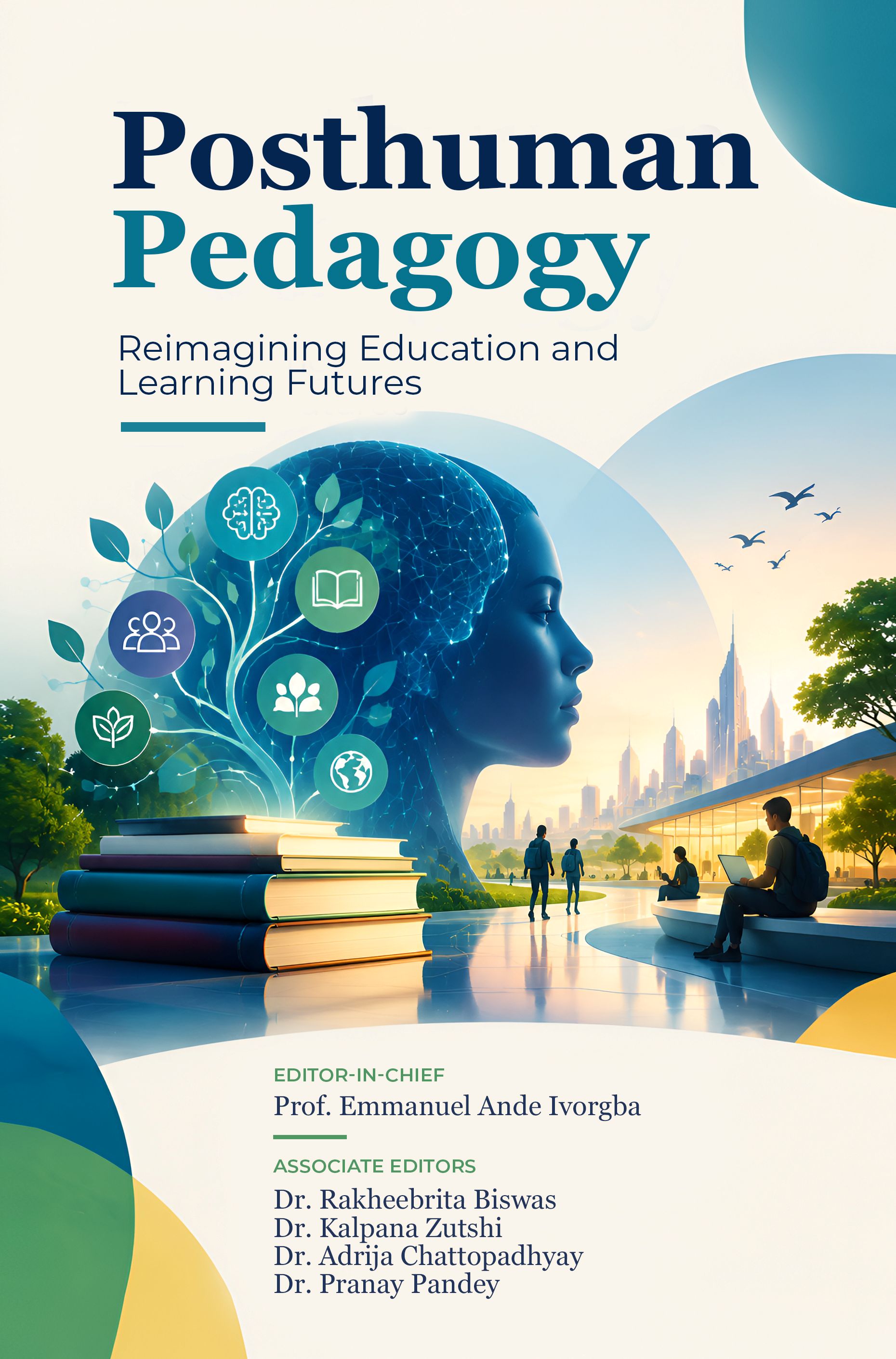
Published
2026-09-10
Issue
Section
Articles

